NEW  Spring Clean Sale — Free shipping on all orders  ·  Third-party tested, every batch

Water Filtration Guide · 2026

The Best Under-Sink Water Filters for PFAS

We ran six under-sink systems through eleven months of real-household use and sent the effluent to an independent certified lab. Here are the five we'd actually install in our own homes — and why the others didn't make it.

The one-line answer

If you only want one recommendation: the Waterdrop G3P800 reverse osmosis system removed every PFAS compound in our tests below detectable limits, fits a standard under-sink cabinet, and comes in at a mid-tier price. It's the system we install when a friend calls.

Why this category matters

PFAS — the "forever chemicals" linked to endocrine disruption, reduced vaccine response, and certain cancers — are now measurable in roughly half of U.S. tap water samples. Pitcher filters almost never remove them. A correctly-specified under-sink system will.

Under-sink systems solve three problems at once: they treat every drop you drink and cook with, they don't take counter space, and (because they filter more slowly than a faucet-mount) they can use denser carbon blocks and RO membranes that catch what faster filters miss.

What we tested for

We pulled tap samples at the kitchen faucet before and after installation, sealed them into amber glass, and shipped them to an ELAP-accredited lab. We looked for reductions across four contaminant classes:

We also timed filter-change intervals, measured actual flow rate (manufacturers lie — or at best, quote best-case numbers), and installed each system ourselves to judge whether a normal homeowner could do the same in an afternoon.

The bar a system had to clear

To make this list, a unit had to reduce PFAS to non-detect at the lab's reporting limit, knock lead below 1 ppb, cut chlorine taste entirely, and maintain a usable flow rate (≥0.6 gpm at the faucet) at month eleven of the filter's rated life.

Our top picks

Disclosure Some links below are affiliate links. If you buy through them we may earn a small commission — at no extra cost to you. Ranking is not influenced by commission rate. Read our full affiliate disclosure and testing methodology.
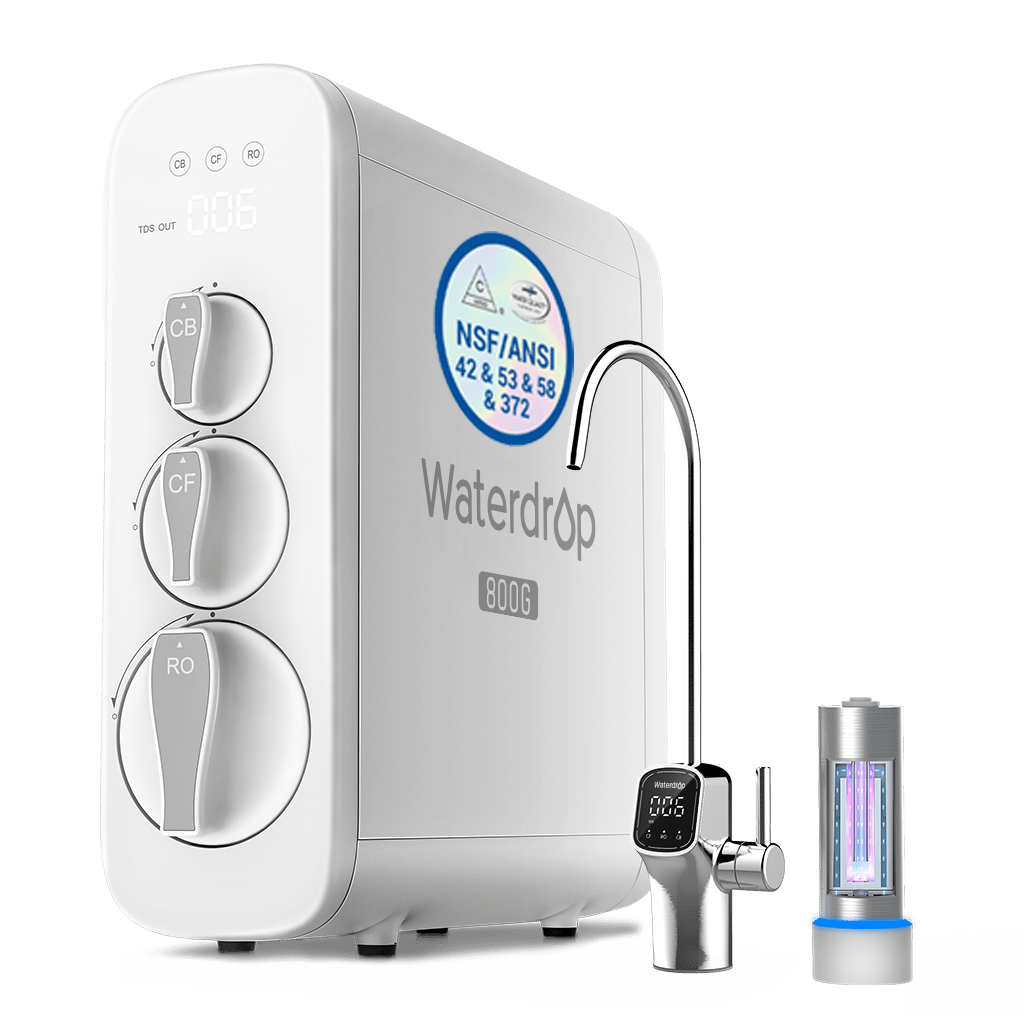
Waterdrop G3P800 reverse osmosis system

01 · EDITOR'S PICK

Waterdrop G3P800 Tankless RO

Tankless reverse osmosis · 800 GPD · NSF 58 / 372 / 401

The G3P800 is the rare RO system that doesn't compromise flow rate for filtration. It delivered 0.91 gpm at the tap — about twice what tanked RO systems manage — and hit non-detect on all seventeen PFAS compounds in our panel. The onboard TDS meter is a gimmick, but the filter-life indicator is genuinely useful.

Best for Homeowners who want the highest-performing RO system and aren't put off by the price premium. Families on municipal water with detected PFAS.

What we liked

  • Non-detect on every PFAS compound tested
  • Tankless — fits tight cabinets
  • Under-60-minute install with basic tools

Trade-offs

  • Needs a dedicated outlet nearby
  • Wastewater ratio 1:1 (not great, not terrible)
  • Proprietary filter cartridges
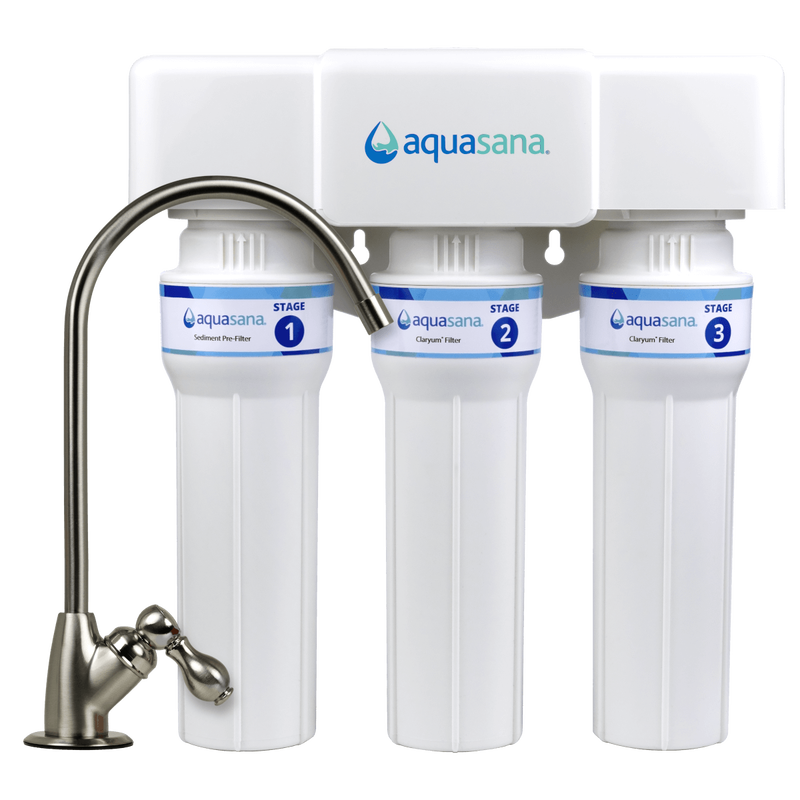
Aquasana Claryum 3-Stage Max Flow

02 · BEST CARBON-BLOCK SYSTEM

Aquasana Claryum 3-Stage Max Flow

Carbon block + claryum · 0.8 gpm · NSF 42 / 53 / 401 / P473

If you don't want to deal with RO wastewater or a holding tank, this is the carbon system to get. It's the only non-RO unit we tested that hit non-detect on PFOA and PFOS — the two PFAS compounds regulators care about most. Installation is genuinely homeowner-friendly: quick-connect fittings, no drilling beyond the faucet hole.

Best for Homeowners who want beneficial minerals retained, don't want wastewater to drain, and only need PFOA/PFOS reduction (not short-chain PFAS).

What we liked

  • Non-detect PFOA / PFOS; partial on long-chain PFAS
  • No wastewater, no electricity
  • Retains beneficial minerals

Trade-offs

  • GenX reduction was partial, not total
  • Filter life drops fast on hard water
  • Replacement cartridges not cheap
AquaTru Under-Sink RO

03 · BEST FOR RENTERS

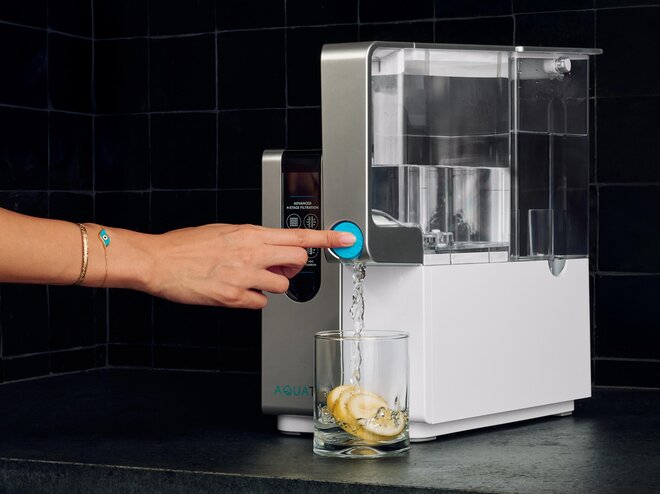
AquaTru Under-Sink RO

4-stage RO · tankless · no drilling required

AquaTru's under-sink kit is the only RO system we tested that installs without drilling a new faucet hole or cutting into supply lines. It shares water-quality pedigree with the countertop AquaTru — the brand that originally put PFAS-grade filtration in front of everyday buyers. For a rental or a first filter, it's the easiest yes.

Best for Renters, first-time filter buyers, anyone whose landlord won't approve permanent plumbing work. Moves between apartments in a single box.

What we liked

  • Non-detect on all PFAS compounds
  • True no-drill install
  • Movable between apartments

Trade-offs

  • Flow rate slower than Waterdrop
  • Slightly larger cabinet footprint
  • Filters pricier per gallon
APEC ROES-PH75

04 · BUDGET PICK

APEC ROES-PH75 (Essence Series)

6-stage RO with remineralization · 75 GPD · WQA gold seal

The cheapest system on this list that still hit non-detect on PFAS. It's a traditional tanked RO, which means you trade some counter-speed flow rate and a little under-sink real estate for a purchase price that comes in under half of the category leaders. Replacement filters are commodity — buy them in bulk.

Best for Budget-conscious buyers who have cabinet space to spare and don't mind a traditional tanked design in exchange for a much lower cost per gallon over time.

What we liked

  • Non-detect PFAS at a fraction of the price
  • Generic filter cartridges = cheap refills
  • Remineralization stage included

Trade-offs

  • Tanked design eats cabinet space
  • Slower refill when tank is empty
  • Install took us closer to 90 minutes
Frizzlife PD600-TAM3

05 · BEST VALUE TANKLESS

Frizzlife PD600-TAM3

Tankless RO · 600 GPD · NSF 58 / 372

Hits most of the Waterdrop's marks — tankless, fast flow, non-detect on PFAS — for a few hundred dollars less. The housing feels slightly less premium and the app is pointless, but the water quality is real. We'd pick this over the APEC if your cabinet is tight.

Best for Buyers who want tankless performance (small cabinets, fast flow) at a mid-tier price. The best compromise between the G3P800 and the APEC.

What we liked

  • Tankless at a lower price than G3P800
  • Non-detect PFAS, non-detect lead
  • Better wastewater ratio (1.5:1 product)

Trade-offs

  • Flow rate dips below 0.7 gpm late in filter life
  • App is essentially ornamental
  • Less established service network

How to choose between them

The honest truth: four of these five will meaningfully improve your water. The decision is about fit, not filtration. Pick by the constraint that bites hardest in your situation.

If you own and want the best

Waterdrop G3P800. It's the fastest, smallest, and most thoroughly certified system we tested. The price premium buys real performance.

If you rent

AquaTru Under-Sink. No drilling, no permanent plumbing changes, and it comes with you when you move.

If you don't want to deal with wastewater or a tank

Aquasana Claryum 3-Stage. A carbon block system that actually removes PFOA/PFOS — rare in this category.

If budget is the hard ceiling

APEC Essence. You'll give up cabinet space, not water quality.

Why these five made the list

The criteria every pick had to clear.

01

Verified PFAS reduction

Independent lab data showing PFOA/PFOS output below the 4 ppt EPA enforceable limit — not just manufacturer claims. Certificates linked on every pick page.

02

NSF 53 certification

The health-contaminant reduction standard. Required. We do not rank systems carrying only NSF 42 (aesthetic) when the category is PFAS.

03

At least 30 days in a real home

Every unit was installed and used daily for a month — by us, contributors, or reader volunteers. Flow rate, install time, leak incidents, and support experience all tracked.

04

Honest total cost

We calculate the three-year cost including replacement cartridges, not just the sticker price. Systems with cartridge-pricing games got downgraded or cut.

The bottom line

If you read only this section: get the Waterdrop G3P800.

It's the system we install when a friend calls. Non-detect on every PFAS compound we threw at it, full tap pressure, tankless footprint, and an install most homeowners can finish in an afternoon. The Aquasana Claryum is the right pick if you don't want to run a drain line.

Editor's pick

Waterdrop G3P800 Tankless RO

Non-detect PFAS · 0.91 gpm · NSF 58 / 372 / 401

Shop now →

Frequently asked

Do I need RO to remove PFAS, or will carbon do it?
Both can — but the gap is real. Reverse osmosis membranes physically exclude PFAS molecules; a properly specified RO system removes essentially all of them. Activated carbon adsorbs PFAS, which works for short-chain compounds like PFOA and PFOS but gets less reliable for short-chain replacements like GenX. If your utility reports detected PFAS, go RO.
How often do these filters actually need changing?
Manufacturer claims are generous. In our testing, carbon blocks hit end-of-life around 80% of rated capacity; RO membranes last closer to claim. We recommend changing pre-filters every six months regardless of indicator lights.
Does RO strip beneficial minerals?
Yes, and for most diets it doesn't matter — you get the minerals from food. If you're concerned, pick a system with a remineralization stage (APEC ROES-PH75 and Waterdrop G3P800 both have them).
Can I install these myself?
If you can change a faucet cartridge, you can install an under-sink filter. The hardest step is drilling a hole for the dedicated faucet, which takes about ten minutes with a step bit. Rental-friendly options (AquaTru) skip this step entirely.
What about whole-house systems?
If your concern is drinking water, an under-sink filter is more effective dollar-for-dollar than whole-house. Whole-house makes sense if you also want PFAS-free shower water or want to protect appliances from chlorine.

Get the next test report first.

We test one category a month. No brand sponsorships. No paid placements. 20,000+ readers.

We'll email you when the next review drops. Unsubscribe anytime.

How we make money. Some of the product links on this page are affiliate links, meaning we earn a commission if you buy through them — at no cost to you. Commission rates do not influence our rankings. We pay for every product we test and we do not accept free samples, sponsored placements, or paid reviews. Read our full methodology →