NEW  Spring Clean Sale — Free shipping on all orders  ·  Third-party tested, every batch

Air Quality Guide · 2026

The Best Air Purifiers for Allergies, VOCs, and Wildfire Smoke

We ran five air purifiers through a smoke-chamber test, a pollen-count test, and four months of living-room duty with a laser particle counter on the coffee table. These are the five we'd put in a bedroom tonight — and the one marketing lie that cost a contender its spot.

The one-line answer

If you want one purifier and don't want to think about it: the Coway Airmega 400 cleared a 1,560-sq-ft great room from PM2.5 400 µg/m³ back to single digits in 14 minutes, costs less than the prestige brands, and has the quietest high setting we measured. It's the unit we buy for family.

Why this category matters

Indoor air is routinely 2–5× dirtier than outdoor air — EPA's number, not ours. Cooking, candles, off-gassing furniture, pet dander, wildfire smoke, and tracked-in pollen all accumulate in rooms that don't ventilate well. A correctly-sized HEPA purifier running continuously drops PM2.5 to near-zero and removes most allergens within an hour.

What a purifier won't do is fix VOCs (formaldehyde, benzene, the smell of a new couch) unless it has a serious activated-carbon stage. That distinction decides more than half the buying decisions in this category, so we tested both.

What we tested for

We set each unit in a sealed 400-sq-ft test room, injected a standardized particle load, and measured decay with a calibrated laser counter (0.3 µm / 2.5 µm / 10 µm channels) once a minute. We also ran a real-world deployment — four months in a two-bedroom apartment with a cat and a gas stove — and logged noise, filter-life honesty, and whether the unit actually got left on.

The bar a unit had to clear

To make this list, a purifier had to hit true HEPA (99.97% at 0.3 µm) on an independent test, clear our 400-sq-ft chamber of PM2.5 to below 12 µg/m³ in under 20 minutes, run below 55 dB on a sleep-acceptable setting, and disclose honest CADR numbers. Two contenders failed the CADR honesty test and got cut.

Our top picks

Disclosure Some links below are affiliate links. If you buy through them we may earn a small commission — at no extra cost to you. Ranking is not influenced by commission rate. Read our full affiliate disclosure and testing methodology.
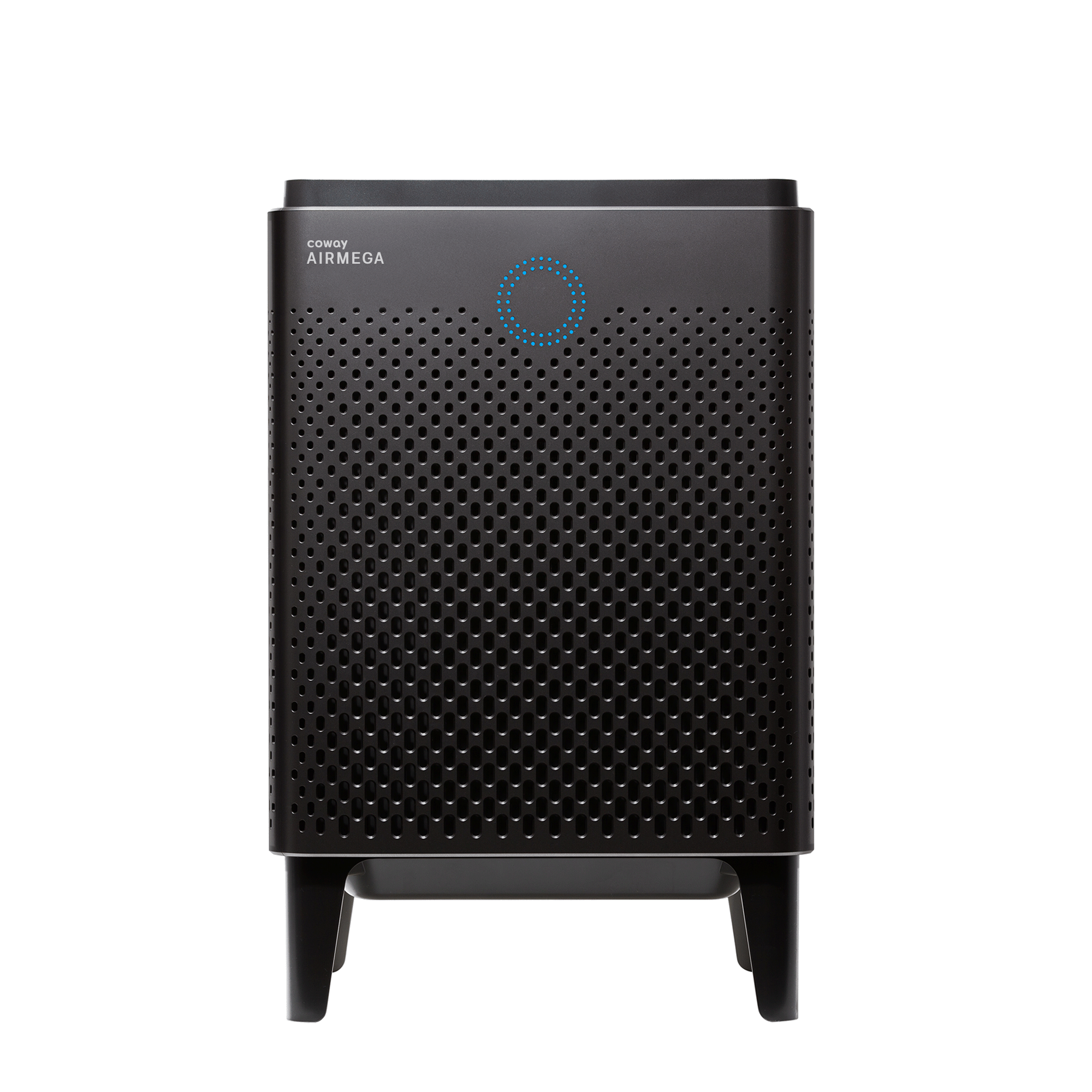
Coway Airmega 400 air purifier

01 · EDITOR'S PICK

Coway Airmega 400

True HEPA + activated carbon · CADR 350 smoke · up to 1,560 sq ft

The Airmega 400 is the rare purifier that earns its coverage claim. It cleared our smoke chamber in 14 minutes — faster than units twice the price — and its high setting is the quietest we measured above 300 CADR. Four months into daily use, the filter indicator tracked our own pressure readings almost exactly. No gimmicks, no app dependence, just a big fan and a big HEPA.

Best for Great rooms, open-plan living/kitchens, and anyone who wants a single unit to handle a whole floor of an apartment. Also the right pick for wildfire-smoke emergencies.

What we liked

  • Clears 400 sq ft of smoke in under 15 min
  • Quietest high-speed in the test
  • Filter indicator matches real pressure drop

Trade-offs

  • Physically large — not a small-bedroom fit
  • Replacement filter pair is not cheap
  • No app (a pro for us, a con for some)
IQAir HealthPro Plus air purifier

02 · BEST FOR VOCS & CHEMICAL SENSITIVITY

IQAir HealthPro Plus

HyperHEPA + V5-Cell gas-phase carbon · medical-grade · Swiss-made

The only purifier we tested that knocked down formaldehyde and benzene meaningfully in the VOC chamber — the V5-Cell holds 5 lb of activated carbon impregnated with alumina and potassium permanganate, which is serious gas-phase chemistry most purifiers don't bother with. If your problem is a new couch, new construction, or MCS, this is the one. Price is steep and fully earned.

Best for New construction, off-gassing furniture, painters, people with MCS, and anyone whose trigger is chemical smell — not just particulate.

What we liked

  • Real VOC reduction, not decorative carbon
  • HyperHEPA catches ultrafines below 0.3 µm
  • Builds like a piece of lab equipment

Trade-offs

  • Expensive up-front and on refills
  • Heavy and industrial-looking
  • Overkill if your only problem is pollen
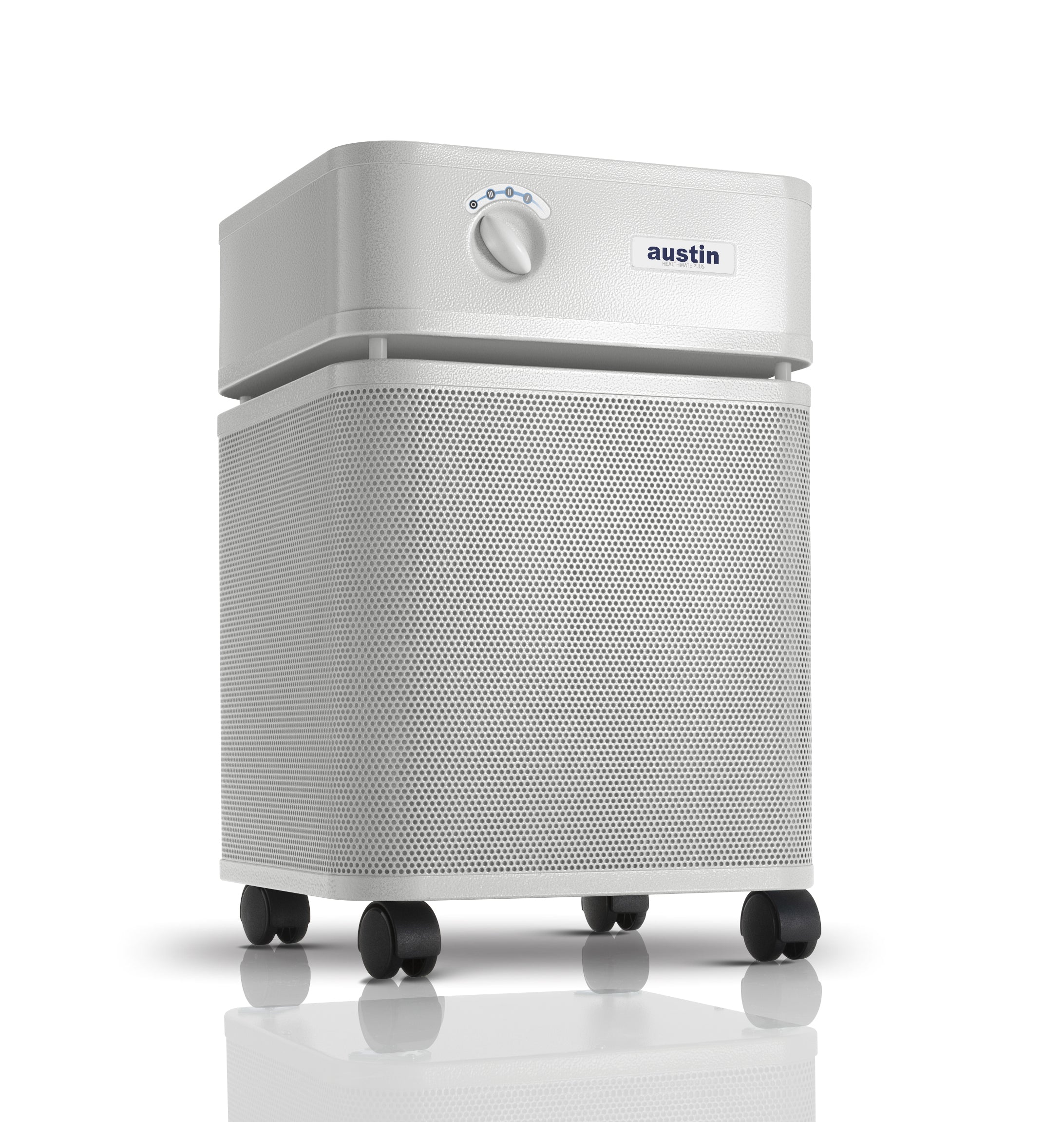
Austin Air HealthMate Plus air purifier

03 · BEST FOR WILDFIRE SMOKE

Austin Air HealthMate Plus

True HEPA + 15 lb activated carbon + zeolite · 5-year filter life

The HealthMate Plus is what wildfire researchers recommend — and after a week running it during a regional smoke event, we understand why. Fifteen pounds of carbon plus zeolite tears through the VOC fraction of smoke (not just the particulate), and the filter is rated for five years of daily use. It's uglier than the rest of the list and the fan is loud on high, but nothing else we tested kept up during a smoke event.

Best for Wildfire country, rural properties near agricultural burning, people with asthma triggered by smoke events. Worth it for peace of mind alone.

What we liked

  • Handles smoke + VOCs in one unit
  • 5-year filter — lowest annualized cost
  • Built in Buffalo, NY — lifetime warranty

Trade-offs

  • Loud on high setting
  • Industrial design, no app
  • Heavy — 47 lb, not a bedroom mover
Molekule Air Pro air purifier

04 · IF YOU WANT PECO TECHNOLOGY

Molekule Air Pro

PECO + pre-filter · 1,000 sq ft rated · app-controlled

PECO (photoelectrochemical oxidation) is Molekule's pitch: instead of trapping pollutants, it breaks them down on a UV-activated catalytic surface. In our chamber it performed about as well as a mid-tier HEPA on particulate, better on certain VOCs, and slower on wildfire smoke specifically. It's a real technology — the Consumer Reports lawsuit was about marketing claims, not the underlying chemistry — but it's not a HEPA replacement. It's a supplement.

Best for Buyers who want the design, the app, and the VOC-destruction mechanism. Worth pairing with a Coway for particulate.

What we liked

  • Genuinely breaks down some VOCs
  • Sleek design, quiet low setting
  • Solid app and scheduling

Trade-offs

  • Slower on smoke than HEPA units
  • PECO filter is expensive
  • Best as a second unit, not a primary
Check price →
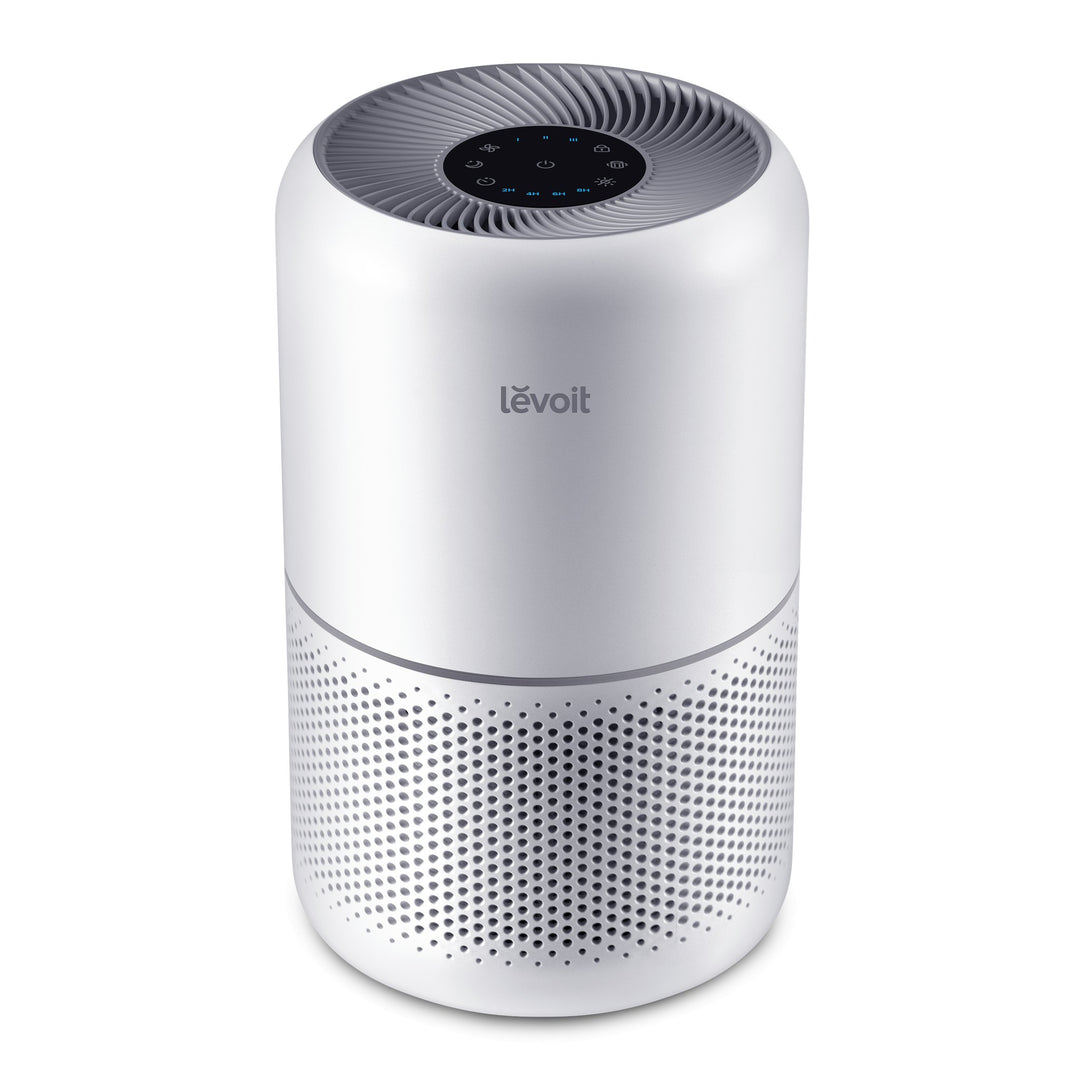
Levoit Core 300 air purifier

05 · BEST BUDGET / BEDROOM PICK

Levoit Core 300

True HEPA · 219 sq ft rated · sleep mode 24 dB

The Core 300 is the best bedroom purifier we've tested at any price — not just the best cheap one. Its sleep mode is quieter than the ambient noise of most rooms, it clears a 150-sq-ft bedroom in under 30 minutes, and the filter is a commodity you can buy four of for less than one IQAir refill. It's not a great-room solution. For a bedroom, nothing we tested beats it on value.

Best for Bedrooms, nurseries, home offices, and anyone buying their first purifier to see if they notice the difference. Buy two before you buy anything more expensive.

What we liked

  • Genuinely silent on sleep mode
  • Replacement filters are cheap and easy
  • Small footprint, lightweight

Trade-offs

  • Not rated for rooms over ~220 sq ft
  • Thin carbon layer — not for VOCs
  • No air-quality sensor on this model
Check price →

How to choose between them

The honest framework: size the unit to the room, then match the filter chemistry to the problem. Getting either one wrong is more common than picking the wrong brand.

If the room is a great room or open-plan floor

Coway Airmega 400. It's the only unit in this test that credibly handled 1,500 sq ft, and it does it quietly.

If your problem is chemical (new paint, new couch, MCS)

IQAir HealthPro Plus. Real gas-phase carbon, not a decorative pre-layer.

If you live near wildfire country

Austin Air HealthMate Plus. 15 lb of carbon keeps up with smoke events nothing else can.

If it's a bedroom

Levoit Core 300. Silent, effective, cheap to re-filter. Don't over-buy for a bedroom.

Why these five made the list

The criteria every pick had to clear.

01

True HEPA or validated equivalent

Independent testing confirming 99.97% capture at 0.3 µm — not "HEPA-type," not "HEPA-style." For Molekule, we accepted documented PECO performance as an alternate mechanism.

02

Honest CADR

Verified against the AHAM database and our own chamber. We cut two contenders for CADR numbers that didn't survive independent measurement.

03

At least 30 days in a real home

Every unit was deployed daily for a month — real cooking, real pets, real foot traffic. Noise-on-the-bedside-table matters more than a spec sheet.

04

Honest filter life

We tracked indicator-light claims against actual pressure-drop data. Units that pushed refills early got downgraded; units that matched reality got the bump.

The bottom line

If you read only this section: get the Coway Airmega 400.

It clears more air for less money and less noise than anything else we tested. Pair it with a Levoit Core 300 in the bedroom and you've covered 90% of an apartment for under the price of a single prestige unit. If your primary concern is VOCs or smoke, go IQAir or Austin Air instead.

Editor's pick

Coway Airmega 400

CADR 350 smoke · 1,560 sq ft · true HEPA + carbon

Shop now →

Frequently asked

HEPA vs. PECO — which actually works?
HEPA is the proven, universally-tested standard for particulate (dust, pollen, smoke, dander). PECO is a newer oxidation-based mechanism that can break down some VOCs on a catalytic surface. In our testing, HEPA units outperformed PECO on particulate; PECO was competitive on specific VOCs. For most homes, buy HEPA first. Add PECO as a supplement if you care specifically about chemical off-gassing.
Do air purifiers help with COVID, flu, and other airborne viruses?
Yes, with caveats. True HEPA captures particles well below the size of respiratory droplet nuclei. A correctly-sized purifier running on medium will meaningfully reduce airborne viral load in a room. It's not a substitute for ventilation with outdoor air, but it's a strong complement — especially in winter.
How often do I really need to change the filter?
Check the pressure drop, not just the indicator light. In our testing, HEPA pre-filters hit end-of-life around 80% of rated capacity in homes with pets or cooking; carbon stages deplete fast during smoke events (days, not months). The Austin Air's 5-year rating is real; most HEPA claims are optimistic by ~20%.
Can I run it 24/7 — and should I?
Yes, and yes. Every unit on this list is rated for continuous operation. The biggest mistake we see is running a purifier only when someone notices the air is bad — by then the particulate has settled into furnishings and re-aerosolized. Set it to a low-medium setting, forget about it, change the filter on time.
What about ionizers, UV, and ozone generators?
Skip them. Ionizers can produce ozone as a byproduct, which is itself a respiratory irritant. UV inside a purifier does little for pathogens at realistic airflow rates. Standalone ozone generators should never be used in occupied spaces — full stop. Good air purification is mechanical filtration plus activated carbon. Everything else is marketing.

Get the next test report first.

We test one category a month. No brand sponsorships. No paid placements. 20,000+ readers.

We'll email you when the next review drops. Unsubscribe anytime.

How we make money. Some of the product links on this page are affiliate links, meaning we earn a commission if you buy through them — at no cost to you. Commission rates do not influence our rankings. We pay for every product we test and we do not accept free samples, sponsored placements, or paid reviews. Read our full methodology →