The five swaps
01 · SWAP THE NONSTICK
Made In Carbon Steel Skillet (10")
French carbon steel · no coating · seasons like cast iron, lighter · lifetime
Nonstick is the single highest-priority swap in the kitchen. Every PTFE coating — even the "PFOA-free" ones — sheds micro- and nano-particles when scratched or overheated, and newer replacement chemicals in the PFAS family are just as persistent. Carbon steel is what professional kitchens reach for: no coating at all, seasons to naturally nonstick over a few months, and it'll outlast your next three apartments.
What we liked
- Zero coating to degrade
- Lighter than cast iron, heats faster
- Seasons to near-nonstick in weeks
Trade-offs
- Requires seasoning and hand-wash
- Reactive with acidic sauces before it's seasoned
- Learning curve vs. nonstick
02 · FILTER THE TAP
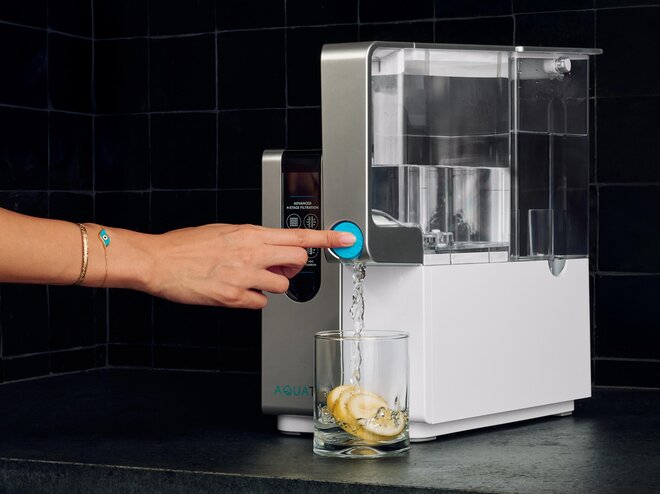
AquaTru Countertop RO
4-stage reverse osmosis · no installation · NSF 58 / 53 / 401 / P473
Tap water is the biggest single source of chemical exposure most households have, and pitcher filters don't touch PFAS. AquaTru's countertop RO is the only "no install, no plumbing" system we've tested that hits non-detect on PFOA, PFOS, and lead at a normal home's flow rate. If you rent, move a lot, or don't want to cut into a supply line — this is the starter system. Upgrade to an under-sink when you own.
What we liked
- Non-detect PFAS and lead in testing
- No installation, plugs into an outlet
- Travels with you between places
Trade-offs
- Takes real counter space
- Filters pricier per gallon than under-sink
- Batch-fill workflow, not on-demand

03 · DITCH THE PLASTIC CUTTING BOARD
John Boos Walnut End-Grain Board
North American walnut · end-grain construction · food-safe mineral oil finish
A 2023 study in Environmental Science & Technology estimated that plastic cutting boards shed 14–71 million microplastic particles per year into food. End-grain hardwood self-heals (the fibers close around the cut) and the surface stays whole for years. John Boos is the American-made standard; buy one, oil it monthly, and it'll outlive the knife you use on it.
What we liked
- No microplastic shedding — full stop
- Self-healing end-grain surface
- American-made, decades of life
Trade-offs
- Heavier than plastic
- Needs monthly mineral oil
- Hand-wash only, no dishwasher

04 · REPLACE PLASTIC FOOD STORAGE
Pyrex Glass Storage (10-piece set)
Tempered borosilicate glass · oven/microwave/freezer safe · BPA-free lids
Every plastic food-storage container — especially warm food, and triple-especially microwaved food — leaches something. Pyrex glass doesn't. A 10-piece set replaces every plastic container in a typical kitchen, costs less than most single "premium" containers, and the glass bodies will outlast any plastic on the market. The lids are the wear item — replace those every few years, keep the glass forever.
What we liked
- Zero chemical migration from body
- Goes from freezer to oven
- Stackable, clear, see-through
Trade-offs
- Heavier to transport than plastic
- Lids still plastic (replace as needed)
- Can shatter if dropped

05 · SWAP THE CLEANERS
Branch Basics All-Purpose Concentrate
Plant-based · EWG Verified · one concentrate → five labeled cleaners
Kitchen cleaners get sprayed on the same surfaces you prep food on, so the distinction between "non-toxic" and "smells natural" matters. Branch Basics publishes its full ingredient list, is EWG Verified (not just "EWG-reviewed"), and one bottle of concentrate dilutes into five different formulas — all-purpose, bathroom, glass, streak-free, laundry. It replaces the drawer of sprays most kitchens accumulate.
What we liked
- Full ingredient disclosure — and it's short
- One product replaces five
- Actually cuts kitchen grease
Trade-offs
- More expensive per bottle up-front
- Concentrate dilution requires a minute of setup
- Not a disinfectant — use separately for raw meat